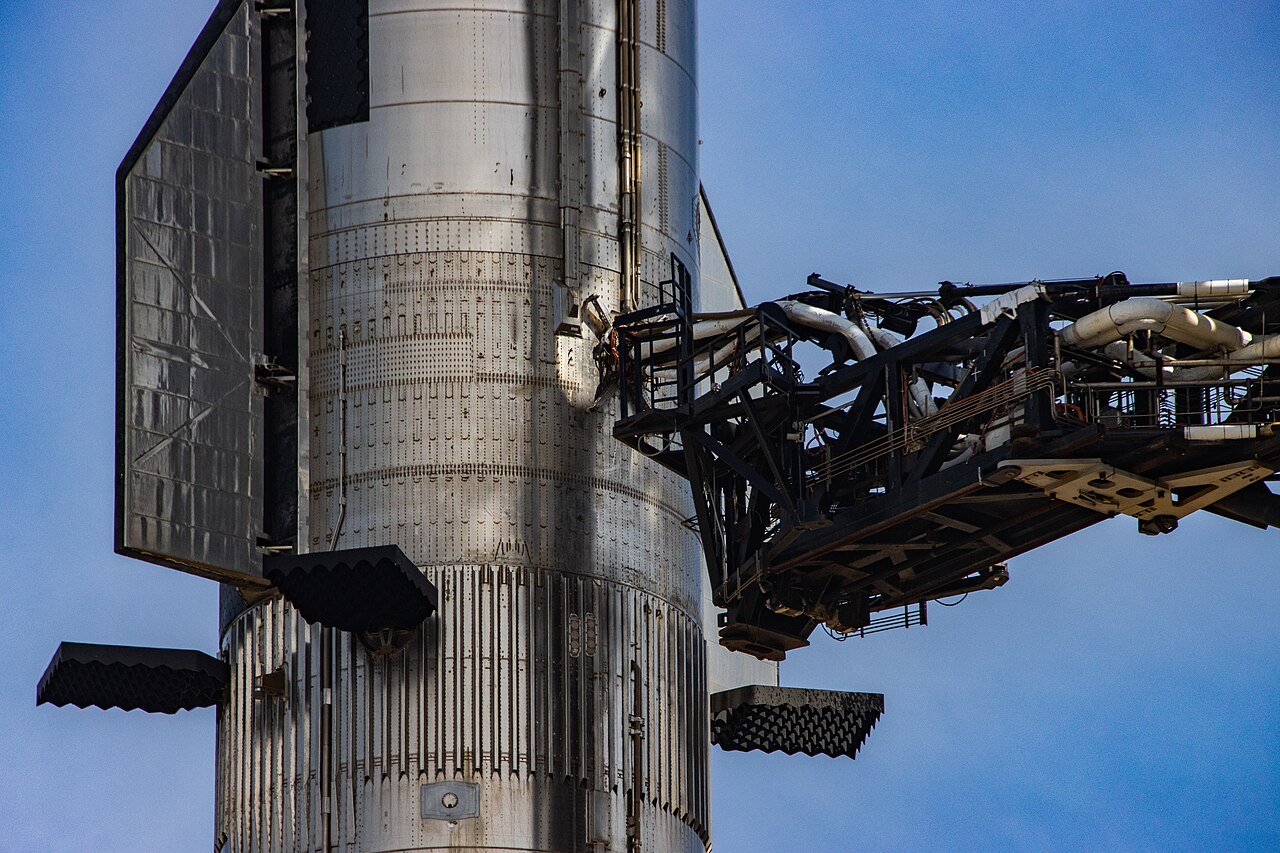
SpaceX Launches Starship Flight 15; Super Heavy Diverts Offshore Instead of Tower Catch
Photo: Jenny Hautmann, CC BY-SA 4.0, via Wikimedia Commons
SpaceX launched its Starship Flight 15 mission from Starbase, Texas, on Friday, Nov. 13, aiming for the first launch-tower catch of its upper stage after the Super Heavy booster diverted to an offshore splashdown.
The rocket lifted off at 5:48 p.m. ET (22:48 UTC) inside a 75-minute launch window. After stage separation, SpaceX said Super Heavy Booster 22 — the first V3 booster planned to attempt a tower catch — diverted to an offshore splashdown in the Gulf rather than returning to the launch arms.
The upper stage, Ship 42, continued its ascent to deploy 26 Starlink V3 satellites into orbit. SpaceX plans for the ship to complete roughly 14 orbits before a first-ever upper-stage catch attempt with the tower's mechanical arms, nicknamed chopsticks, roughly 22.5 hours after liftoff on Saturday.
SpaceX said it will clear the upper stage for a return to Starbase only after checking its condition in orbit, with contingency ocean splashdown options available if any issues appear.
SpaceX has caught the Super Heavy booster on three earlier flights. The Starship upper stage has never been caught and has previously splashed down in the ocean after reaching orbit for the first time in September.
The company has long aimed to make Starship fully reusable so both stages can be recovered and flown repeatedly.
Verified Facts
- SpaceX launched Starship Flight 15 from Starbase, Texas, on Friday, Nov. 13, 2026, lifting off at 5:48 p.m. ET (22:48 UTC) during a 75-minute launch window. (space.com, X @SpaceX)
- After stage separation, SpaceX said the Super Heavy booster (Booster 22, the first V3 booster planned to attempt a landing) diverted to an offshore splashdown in the Gulf instead of returning for a launch-tower catch. (X @SpaceX, space.com)
- The Ship 42 upper stage continued its ascent to deploy 26 Starlink V3 satellites and complete roughly 14 orbits before a planned tower catch attempt about 22.5 hours after liftoff on Saturday, Nov. 14. (space.com, Spaceflight Now)
- SpaceX will use the mechanical arms nicknamed chopsticks on its launch tower to attempt the upper-stage catch only if in-flight checks clear the vehicle; contingency ocean splashdown options remain available if problems appear. (BBC News, Spaceflight Now)
- SpaceX has caught the Super Heavy booster on three earlier test flights, while the upper stage — which first reached orbit in September — has never been caught and previously splashed down in the ocean. (BBC News, space.com)
- Building a fully reusable rocket so both stages can fly repeatedly is a long-held SpaceX goal. (BBC News, Spaceflight Now)
Sources
- X @SpaceX: Liftoff of Starship!
- X @SpaceX: Super Heavy has diverted to an offshore splashdown in the Gulf
- space.com: SpaceX Starship Flight 15 live updates
- space.com: Watch SpaceX attempt a historic Starship launch and double-catch landing today (Nov. 13)
- Spaceflight Now: Live Coverage: Starship Flight 15 attempts to recover full vehicle in double launch pad catch
- BBC News: Elon Musk’s SpaceX to attempt double catch of Starship rocket