Why Video Game Journalism Only Benefits Developers
Allow me to let you in on a little secret:
Video game review scores are completely bought and paid for. In fact, they’re the entire foundation of “gaming journalism.” There hasn’t been an honest review in over 20 years.
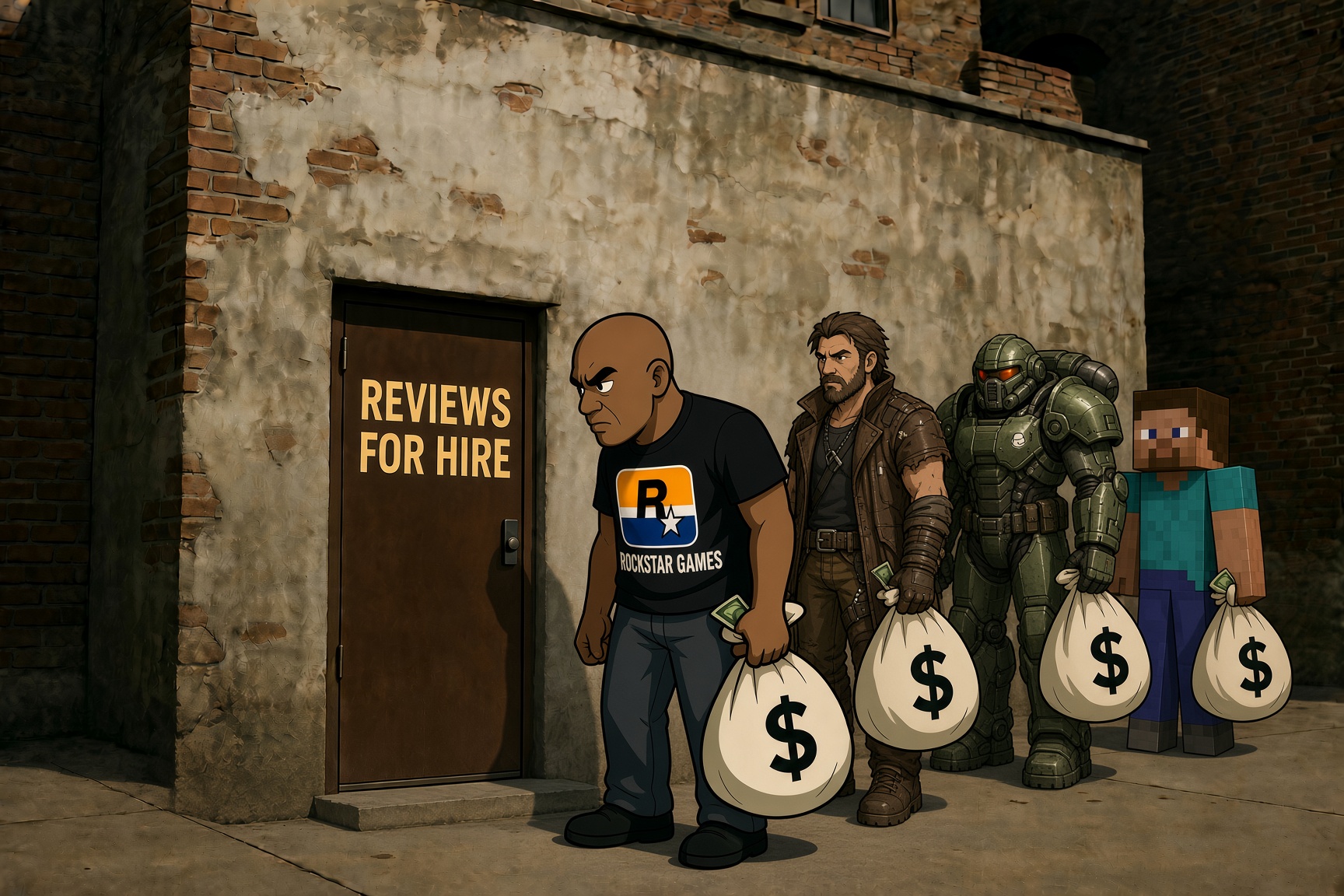
I’m not talking about a guy in a back room with a briefcase, though I wouldn’t rule it out. I’m talking about the business. Ad money, early review copies, embargo dates, publisher-funded junkets. The people writing the reviews don’t work for you. They work for the companies that can turn off the cash flow.
And now I’ll explain how that happened.
In the early 2000s, the only people with an appetite for this kind of media were dorks like me, and back then we still hadn’t reached the mainstream. Large game companies weren’t targeting our niche with advertising, because we were already consumers of their products. They needed to convince people outside our demographic to buy. Once their games were generating headlines on this new thing called the internet, instead of being relegated to magazines that only a small number of eccentrics read, a bad score could cost them tens of millions of dollars. So their solution? Pour a couple million into the gaming “journalists” instead, and make sure that didn’t happen.
Suddenly the scene was surging with smaller outfits being elevated, and a nearly unanimous message: “every game that pays us is the best game ever made.” Not even Giant Bomb was spared, and that one stings, because Giant Bomb was founded to fight this exact problem.
Time for a little ancient history. Jeff Gerstmann was editorial director at GameSpot in 2007 when he gave Kane & Lynch: Dead Men a 6 out of 10. The publisher, Eidos, was a big advertiser on the site, and they were not happy about that score. GameSpot denied the two things were connected. Gerstmann was fired anyway. A few years later, he confirmed what everybody already suspected: he’d been terminated after clashing with management and advertisers over review scores.
He went off and started Giant Bomb in 2008, launched a long-form podcast almost immediately, and rose to the very top as the arbiter of true reviews. They hung on for more than a decade as the last bastion across the whole industry, while their contemporaries ended their print editions, went through massive layoffs, and mostly ceased to exist. Gamers were never fooled by the bought-and-paid reviews.
Eventually the corporate owners caught up with him. In 2022, the marketing company that owned Giant Bomb, Red Ventures, ousted Jeff from the company he built. That’s a story for another day. The official line was that they’d agreed to go their separate ways. Jeff later said he got fired three weeks before he was going to quit. By then the original crew was already gone. They captured the brand, and as far as I’m concerned, Giant Bomb became another dime-a-dozen review hooker in a business that sells access and friendly coverage to any John with a stack of Benjamins.
Now Giant Bomb is handing Grand Theft Auto VI a perfect score the day before it’s even out, just like the rest of the riffraff. Five out of five, their version of a 10/10, posted before people like you and me can even play it. The entire video game journalism side hustle runs on money and access from the companies whose games they’re reviewing. There is no organic customer base. They have no target consumer. You are not the customer. The companies that make the games are.
It’s just a microcosm of the exact same problem plaguing actual journalism. It’s a racket.